Author: Jeremy
Published on: 2026-09-26

Found a condo, house or pool villa you want to rent in Pattaya?
Before transferring the remaining payment and taking the keys, one of the most important steps is checking the rental agreement.
A good agreement should clearly state what you are renting, how much you are paying, the length of the tenancy, security deposit, utilities and repairs, and what happens if you need to leave before the contract ends.
This guide covers the key terms tenants should understand before signing, based on the practical issues that commonly arise when renting condos, houses and pool villas in Pattaya.
If you are still searching for a home, browse current properties for rent in Pattaya.
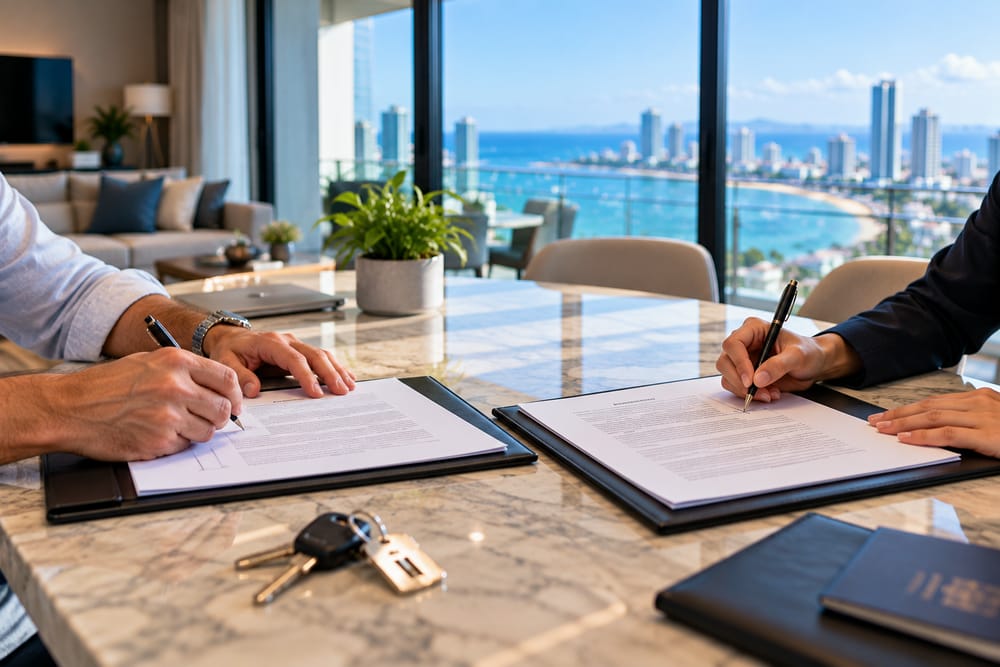
For a typical residential rental in Pattaya, the agreement should clearly identify:
- the landlord and tenant;
- the exact property being rented;
- lease start and end dates;
- monthly rent and payment date;
- payment method and authorised recipient;
- security deposit and advance rent;
- electricity, water and other charges;
- furniture and appliances included;
- maintenance responsibilities;
- early-termination conditions; and
- conditions for returning the security deposit.
Any important condition agreed during negotiations should also appear in the contract or be recorded in writing.
Do not assume that something discussed during a viewing will automatically form part of the rental agreement.
Tenants should always have a written rental agreement.
Under Section 538 of Thailand’s Civil and Commercial Code, a lease of immovable property is not enforceable by legal action unless there is written evidence signed by the party liable.
There is an additional requirement for longer leases. A lease exceeding three years must be made in writing and registered with the competent authority to be enforceable beyond three years.
For the six- or twelve-month agreements commonly seen in Pattaya’s long-term residential rental market, the practical approach is straightforward: make sure the agreed terms are written down and both sides have a signed copy.
Start by checking that the agreement identifies the correct landlord and the exact property you viewed.
For a condominium, the individual unit should be clearly identifiable rather than the agreement simply stating the condominium development.
For a house or pool villa, check the property address and relevant identifying details.
If somebody is acting on behalf of the owner, their authority to enter into the rental agreement should also be established.
This is particularly important when a property has been found through social media, online marketplace groups or an unfamiliar intermediary.
For more warning signs before transferring money, read our guide to avoiding rental scams in Pattaya.
The rental agreement should clearly show when your tenancy starts and when it ends.
Long-term properties in Pattaya are commonly offered on six- or twelve-month terms, although the exact lease period depends on the property and owner.
Check:
- move-in date;
- lease expiry date;
- monthly payment date;
- notice requirements;
- renewal arrangements; and
- any agreed early-termination conditions.
Do not assume that you can automatically renew the property at the same rent after the original contract expires.
If you are still learning how the overall rental process works, our guide to renting in Pattaya covers property searches, viewings, costs and moving in.
A security deposit together with advance rent is common in Pattaya’s long-term rental market.
Security deposits and advance rent are common in Pattaya’s long-term rental market, but the amount and payment structure can vary between properties and landlords.
Treat this as common market practice rather than assuming that every Pattaya rental must follow exactly the same payment structure.
Before transferring money, check that the agreement clearly states:
- security deposit amount;
- rent paid in advance;
- monthly rent;
- payment date;
- circumstances in which deductions may be made; and
- how the remaining deposit will be returned after the tenancy.
Keep evidence of payments made to the landlord or authorised recipient.
The most important point is that you understand what you are paying and the conditions attached to the deposit before signing.
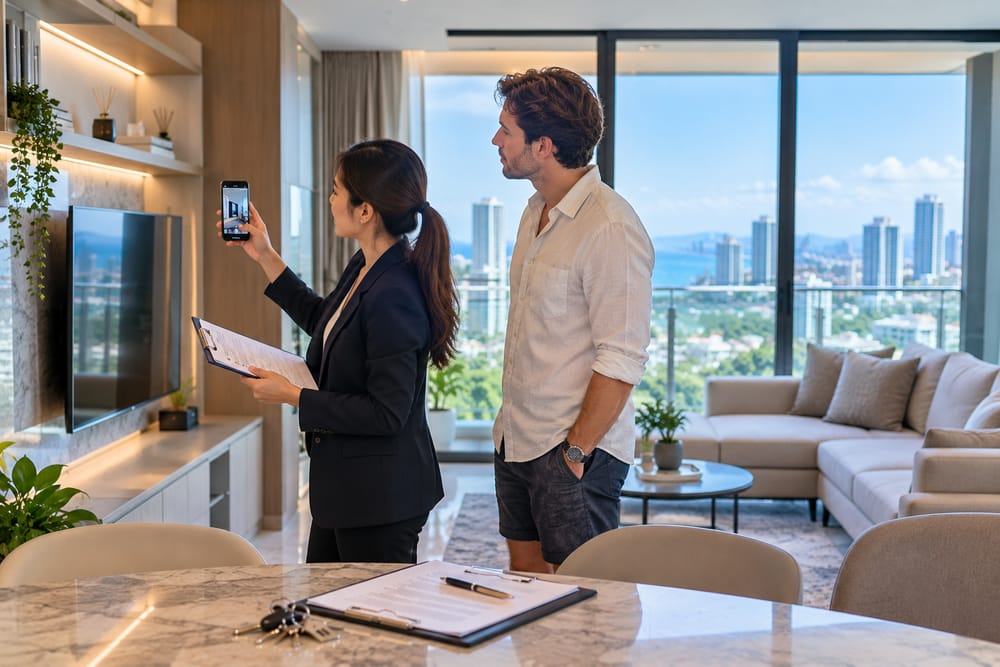
Most condos and many houses and pool villas offered for rent in Pattaya are furnished.
The rental agreement or accompanying inventory should therefore record the important furniture, appliances and equipment included with the property.
Check items such as:
- beds and mattresses;
- sofas and tables;
- televisions;
- refrigerator;
- washing machine;
- cooking appliances;
- air-conditioning units;
- water heaters; and
- other furniture or equipment supplied by the owner.
If an expensive item shown during the viewing is important to you, make sure it will remain in the property when you move in.
A proper move-in condition record is one of the easiest ways to prevent disagreements later.
Before unpacking, photograph or record video of:
- walls and flooring;
- furniture;
- kitchen surfaces;
- televisions and appliances;
- air-conditioning units;
- bathrooms;
- windows and doors;
- existing scratches, stains or damage; and
- electricity and water meter readings where relevant.
Keep these records for the duration of the tenancy.
If a table already has a scratch or a wall already has damage, it is much easier to establish its previous condition when you have photographs taken at move-in.
Do not wait until something breaks to find out who is responsible.
The agreement should make maintenance responsibilities as clear as possible.
Common issues in Pattaya rentals include:
- air-conditioning problems;
- washing machines;
- refrigerators;
- water heaters;
- plumbing;
- electrical systems;
- furniture damage; and
- general wear from everyday use.
There is an important difference between something failing through ordinary use and damage caused by a tenant.
For houses and pool villas, there may be additional responsibilities involving the garden, swimming pool, pest control or external areas.
If you are renting a private pool villa, check whether routine pool and garden maintenance is included in the monthly rent or paid separately.
Never assume that utilities are included in the advertised monthly rent.
Before signing, establish how you will pay for:
- electricity;
- water;
- internet;
- pool maintenance where applicable;
- garden maintenance where applicable; and
- any other agreed services.
Depending on the property, electricity and water may be paid directly to the relevant provider, through the condominium or housing development, or according to another arrangement stated in the agreement.
Ask for the charging method before signing rather than discovering it after receiving the first bill.
This is one of the most important clauses to understand before signing a fixed-term rental agreement.
Ask a simple question:
What happens if I need to leave before the contract expires?
The agreement should explain the notice requirements and any consequences of ending the tenancy early.
Do not automatically assume that giving 30 days’ notice allows you to leave any fixed-term rental without further consequences.
If you know that your employment, travel plans or circumstances in Thailand may change, discuss flexibility with the owner before signing the contract.
It is much easier to negotiate an acceptable termination condition before committing to the property than after you have decided to leave.
If you have a pet, ask before paying a booking fee or deposit.
Some condominium developments have restrictions on pets regardless of whether an individual owner is personally willing to accept them.
Depending on your circumstances, also check any rules concerning:
- smoking;
- number of occupants;
- parking;
- subletting;
- commercial use; and
- condominium or housing-development regulations.
If something is important to how you intend to use the property, confirm it before signing.
Do not wait until move-out to ask how your security deposit will be handled.
Your agreement should explain the circumstances in which deductions can be made and how the remaining deposit will be returned.
Before leaving the property, it is sensible to:
- arrange a final inspection;
- photograph the property’s condition;
- record final utility readings where applicable;
- settle agreed outstanding bills;
- return keys and access cards; and
- keep a record of any agreed deductions.
Your move-in inventory and photographs can then be compared with the property’s condition at the end of the tenancy.
Normal use of a property over time should also be distinguished from actual tenant-caused damage when discussing the property’s condition.
Yes. Foreigners can rent residential property in Pattaya, including condos, houses and pool villas.
Foreign ownership restrictions that apply when buying certain types of property in Thailand should not be confused with renting a home.
When preparing a rental agreement, a foreign tenant will normally be asked to provide passport identification and the information required to prepare the tenancy documentation.
Depending on the circumstances, the property owner or responsible party may also have separate immigration accommodation-reporting obligations.
A lease exceeding three years must be made in writing and registered with the competent authority to be enforceable beyond three years.
This is different from the normal six- or twelve-month residential agreements commonly used for Pattaya rentals.
If you are considering a multi-year registered lease or another unusual long-term arrangement involving significant money, obtaining independent Thai legal advice before signing is sensible.
For a foreign tenant, a Thai-English rental agreement can make it easier for both parties to understand what has been agreed.
The important point is that you understand the contract you are signing.
If a clause is unclear, ask for an explanation or amendment before signing rather than assuming it is simply a “standard” condition.
Important agreements concerning payments, repairs, furniture, pets, early termination or other special conditions should be recorded in writing.
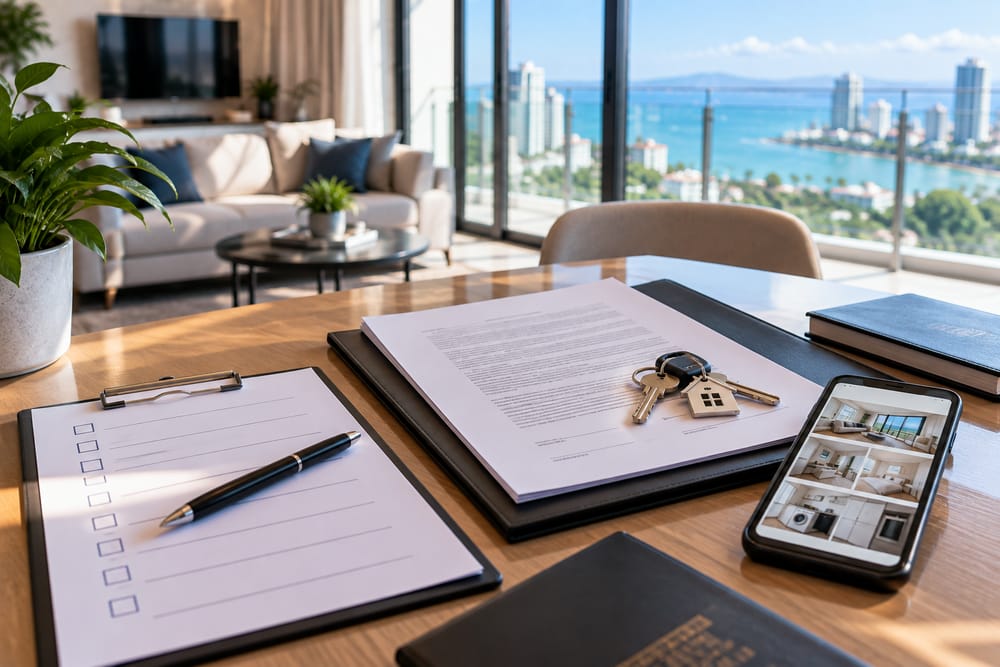
Before signing the agreement and making your final payment, check:
Landlord and property 🏡
- Landlord correctly identified
- Exact condo unit, house or villa identified
- Authority confirmed if somebody acts for the owner
Payments 💰
- Monthly rent correct
- Payment date clear
- Security deposit recorded
- Advance rent recorded
- Utility arrangements understood
Property 🛋️
- Furniture and appliance inventory checked
- Existing damage recorded
- Move-in photographs taken
- Meter readings recorded where relevant
Contract 📑
- Start and end dates correct
- Maintenance responsibilities understood
- Early-termination clause checked
- Renewal conditions understood
- Deposit-return conditions understood
- Special agreements included in writing
Taking a few minutes to check these details before signing can prevent much bigger misunderstandings later.
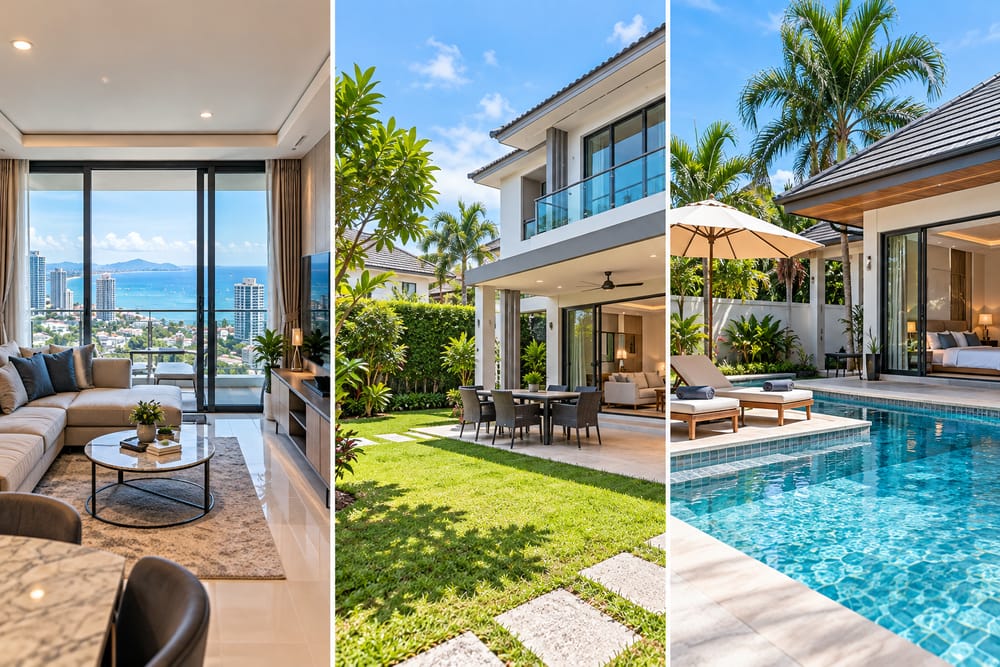
The basic rental agreement principles are similar across different property types, but the details you need to check can vary.
For a condominium, pay particular attention to the exact unit, furniture inventory, utilities, access cards, parking and building rules.
Explore current Pattaya Condo For Rent.
For a house, clarify responsibilities for maintenance, external areas, garden care where applicable and any services associated with the property.
Explore current Pattaya House For Rent.
For a private pool villa, establish who is responsible for routine pool and garden servicing and whether those services are included in the monthly rent.
Explore current Pattaya Pool Villa For Rent.
To compare all property types, browse Pattaya Property For Rent.

A good rental agreement should confirm what the tenant and owner have agreed rather than create surprises after moving in.
PropertySpace helps tenants search for condos, houses and pool villas across Pattaya, arrange property viewings, communicate offers and rental terms with owners, coordinate rental documentation and complete the property handover.
If you are at the beginning of your search, read our complete guide to renting in Pattaya.
Or browse current properties for rent in Pattaya and speak with PropertySpace about what you are looking for.
Property owners can instead read our guide to renting out property in Pattaya.
This article provides general information about residential rentals in Pattaya and is not legal advice. Rental terms can vary between properties, landlords and individual agreements. For a significant contractual issue, long-term lease or legal dispute, seek advice from a qualified Thai legal professional.
A Pattaya rental agreement should identify the landlord, tenant and property and clearly state the lease dates, monthly rent, security deposit, payment terms, utilities, inventory, maintenance responsibilities, early-termination conditions and arrangements for returning the deposit.
A two-month security deposit is commonly requested for privately owned long-term rental properties in Pattaya, although payment terms can vary between landlords and properties. Check the exact deposit, advance rent and refund conditions before signing.
Tenants should always use a written rental agreement. Under Section 538 of Thailand’s Civil and Commercial Code, a lease of immovable property is not enforceable by legal action without written evidence signed by the party liable.
Yes. Foreigners can rent condos, houses and pool villas in Pattaya. Property ownership restrictions that may apply when purchasing Thai real estate should not be confused with renting a residential property.
This depends on the rental agreement and individual circumstances. Check the early-termination clause before signing, including the required notice and any financial consequences. If flexibility is important, negotiate the termination terms with the owner before committing to the property.
Responsibilities should be stated in the rental agreement. The contract should make clear how tenant-caused damage, routine maintenance and problems with the property’s appliances or systems will be handled.
Photograph the walls, floors, furniture, appliances, air-conditioning units, bathrooms, kitchen, existing scratches or damage, and electricity and water meters where relevant. Keep the photographs until the tenancy and deposit have been fully settled.
A Thai-English agreement can be useful when a foreign tenant is involved because it helps both sides understand the agreed terms. Most importantly, do not sign important contractual terms you do not understand.
An ordinary one-year residential rental does not need Land Office registration simply because it is a lease. Registration becomes relevant when a lease exceeds three years and is intended to be enforceable beyond three years.
Confirm the property and landlord, read the rental agreement, check the deposit and advance-rent amounts, understand the refund conditions and make sure important negotiated terms are recorded in writing before transferring money.

Jeremy
Real Estate Agent
Avoiding Rental Scams in Pattaya: What to Look Out for When Renting (2026 Guide)
Learn what to look out for when renting in Pattaya in 2026, including common rental scams, agent risks, and contract mistakes to avoid.

Best Areas to Buy a House in Pattaya 2025 | PropertySpace Pattaya Guide
Discover the best areas to buy a house in Pattaya in 2025, from family-friendly neighborhoods to premium villa zones.

Best Areas to Live & Buy Property in Pattaya — PropertySpace Neighborhood Guide
Looking for the best areas to live or buy property in Pattaya? Discover lifestyle insights, expat favorites, and expert guidance from PropertySpace.
Best Modern Condos in Jomtien (2026 Guide for Foreign Buyers)
A practical 2026 guide to the best modern condos in Jomtien for foreign buyers and expats, featuring beachfront, lifestyle, and long-stay condominium options.

Best Pattaya Properties for Sale: Condos, Houses & Villas
Explore the best Pattaya properties for sale, including condos, houses, pool villas, top areas, prices, and buying tips for foreign buyers.

Best Real Estate Agency in Pattaya 2025 | PropertySpace Guide
Discover how to find the best real estate agency in Pattaya. Expert tips and trusted local insight from PropertySpace Pattaya.

Buying a Condo or Villa in Pattaya: The Ultimate Guide for Expats
Navigating the legal landscape is essential when buying property in Pattaya as an expat.

Can Foreigners Buy Property in Pattaya? A Comprehensive Guide
Understanding Property Ownership for Foreigners in Thailand

Discover the Luxurious Lifestyle at Zenith Pattaya: A Wellness-Centered Paradise
Pattaya's First Wellness-Centered Living Experience

Highgate International School Pattaya | Property Investment Guide
Discover how Highgate International School Thailand boosts Pattaya’s real estate market and property investment opportunities.
How to Buy a Condo in Thailand as a Foreigner: Step-by-Step Process (2026 Guide)
A practical 2026 guide for foreigners buying a condo in Thailand, covering foreign quota, FET, costs, contracts, and transfer steps clearly.
How to Rent Out Property in Pattaya: 2026 Landlord Guide
Learn how to rent out property in Pattaya as a foreign owner, including TM30, tenant screening, rental pricing, tax and property management.

How to Sell a Condo in Pattaya as a Foreign Owner
A practical guide for foreign condo owners in Pattaya covering resale pricing, documents, taxes, transfer fees and sending sale proceeds overseas.

International Schools in Pattaya: Complete Guide for Expat Families
Explore international schools in Pattaya, curriculum options, fees structure and best areas for expat families relocating to Thailand.
Leasehold vs Freehold in Pattaya: What Foreign Buyers Should Actually Know Before Buying
Understand leasehold vs freehold in Pattaya for foreign buyers. Learn the real differences, legal risks, resale impact, and which ownership type may suit your goals.

Luxury Coastal Living at Aquarous Jomtien Condominium, Pattaya
Discover Aquarous Jomtien Condominium, a stunning high-rise development in Jomtien Pattaya, offering breathtaking 85% sea-view units, world-class amenities, and luxurious living spaces.

Off-Plan Condos in Pattaya: A Wise Investment or a Risky Bet?
This article aims to guide you through the ins and outs of investing in off-plan condos in Pattaya.

Pattaya Smart City: How AI CCTV Is Making Pattaya a Safer Place to Live, Visit, and Invest
Pattaya Smart City is transforming Pattaya through AI CCTV, Pattaya Connect, and smarter public safety systems, helping create a safer city for residents, tourists, and property investors in 2026.

Property Inspection Pattaya: What Buyers Should Really Check Before Taking Ownership (2026)
Learn what buyers should really check during a property inspection in Pattaya, including common issues, timing, and new vs resale considerations.
Renting in Pattaya: What to Know Before You Rent
Everything you need to know about renting a condo, house, or pool villa in Pattaya — best areas, costs, documents, and what your rental agent actually does.

Thailand Elite Visa vs Retirement Visa: Which Is Right for Pattaya Property Buyers in 2026?
Thinking of buying property in Pattaya and staying long-term? This guide compares the Thailand Retirement Visa and the Thailand Privilege Card (Elite Visa) — covering costs, requirements, and which long-stay visa suits your lifestyle and budget in 2026.

The Riviera Beverly Hills Residence: Pattaya’s New Luxury Condo Investment Opportunity
Discover The Riviera Beverly Hills Residence, a luxury low-rise condo in Jomtien. Perfect for investors, expats & families seeking a Pattaya property.

The Riviera California - Iconic Living For The Few
Luxury Sea View Condos in Pattaya with 5-Star Concierge & Iconic Rooftop Pools | 122 Residences Only

The Riviera Santa Monica: Luxury Living Meets California Vibes in Jomtien, Pattaya
Discover The Riviera Santa Monica, an extraordinary 7th high-rise condominium by the award-winning Riviera Group.

Top 5 Condos in Pattaya 2025 | Best New Projects & Investment Guide
Discover Pattaya’s top 5 condo projects for 2025 — verified developments, investment potential, and local insight from PropertySpace.

Top Luxury Villas in Pattaya 2025 | PropertySpace Pattaya Guide
Explore Pattaya’s top luxury villa estates and pool villas in 2025 — gated communities, prime areas, and trusted insights from PropertySpace Pattaya

What Are the Real Buying Costs of a Condo in Pattaya?
Understand the real buying costs of a condo in Pattaya, including transfer fees, maintenance fees, sinking fund, legal checks, and hidden costs buyers often miss.

Where to Buy a House in Pattaya as a Foreigner (2026 Practical Guide)
A practical 2026 guide for foreigners buying houses in Pattaya, covering the best areas, ownership options, and real-life buying considerations.

Why Pattaya Attracts Long-Stay Residents, Retirees and Second-Home Owners in Thailand
Discover why Pattaya attracts long-stay residents, retirees, and second-home owners seeking coastal living, convenience, and lifestyle flexibility

Why Pattaya is the Ideal Destination for Retirement
Discover why Pattaya is the ideal place to retire in Thailand
Why Pattaya Property Looks Stronger in 2026: EEC Growth, 3 Million Baht Condo Rules, and What Foreign Buyers Should Know
Pattaya property in 2026 is being shaped by EEC growth, stronger infrastructure, Aquatique District, and the 3 million baht condo extension support route. This guide explains what foreign buyers should understand before investing.

089 714 1551 (ENG/TH)
Call Now081 969 4950 (ENG/CN)
Call Now