Author: Jom
Published on: 2026-03-23
If you are planning to buy property in Pattaya as a foreigner, one of the most important decisions is not just which property to buy — it is how you will legally own it.
Many buyers focus first on sea views, location, developer reputation, or price. But the ownership structure can affect your long-term security, resale flexibility, inheritance planning, and even how easy it is to exit the investment later.
In Pattaya, the difference between leasehold and freehold is especially important because foreign buyers can legally own some property types outright, while others usually require a different legal structure.
This guide explains the real-world difference between leasehold and freehold in Pattaya, how each option works for foreign buyers, and when one may make more sense than the other.
A lot of Pattaya property marketing makes leasehold and freehold sound like simple label differences. In reality, they are not the same.
The ownership structure affects:
- How secure your legal position is
- Whether your name goes directly on the title deed
- How easy the property may be to resell
- Whether your heirs can inherit it cleanly
- How banks, lawyers, and future buyers view the asset
- Whether you are buying a condo, a house, or a villa
This is why two properties that look similar on paper can behave very differently over time.
If you are new to the Thai market, it helps to first understand the broader legal framework in our guide on can foreigners buy property in Pattaya. That article covers the wider rules, while this one focuses specifically on the leasehold vs freehold decision.
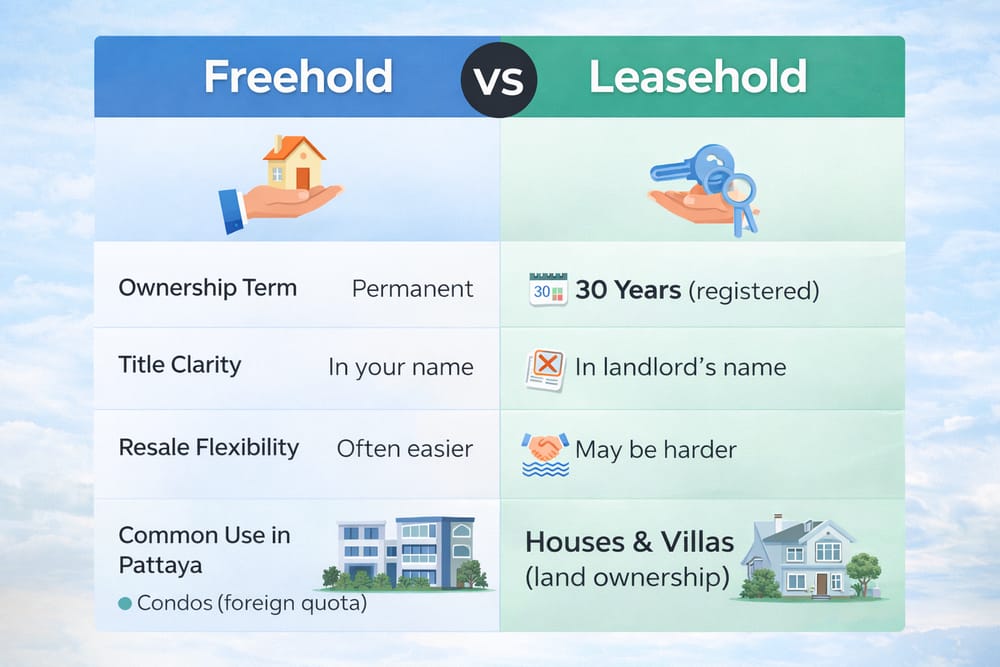
In simple terms, freehold means permanent ownership.
For foreign buyers in Pattaya, this usually refers to freehold condominium ownership, where the condo unit can be registered directly in the foreign buyer’s own name on the title deed, as long as the building’s foreign ownership quota is still available.
For most foreign buyers in Pattaya:
- You can legally own a condominium unit in your own name
- The condo must fall within the building’s foreign quota
- The foreign quota is generally capped at 49% of the total saleable floor area in the condominium project
- Your ownership is generally more straightforward, easier to prove, and usually easier to transfer later
This is why foreign freehold condos are often seen as the most direct and legally clean ownership structure available to non-Thai buyers in Pattaya.
Freehold condos are popular because they offer:
- Direct ownership in your own name
- Clearer resale appeal
- Stronger long-term control
- Simpler inheritance planning
- Better comfort for overseas buyers who want fewer legal layers
If your main goal is simplicity, security, and a cleaner exit later, freehold is usually the benchmark many foreign buyers compare everything else against.
Leasehold does not mean you own the property outright forever.
Instead, it usually means you have the legal right to use and occupy the property for a fixed period under a lease agreement.
In Thailand, residential leaseholds are commonly structured for up to 30 years, with some projects or agreements mentioning renewal options, but those renewal promises should be reviewed very carefully because they are not always the same as guaranteed perpetual ownership
In Pattaya, leasehold is commonly seen when:
- A retired foreign buyer wants a house or pool villa
- The land cannot be owned directly by a foreign individual
- A condo’s foreign freehold quota is already full
- A developer offers a lower-priced leasehold version of a similar product
- A buyer is more focused on use or lifestyle than long-term title security
Many foreign buyers hear “30 years + 30 + 30” and assume that means a guaranteed 90 years.
That is not how you should think about it.
A 30-year registered lease is the main legal core. Any renewal language beyond that needs proper legal review and should never be treated casually as identical to freehold.
That does not automatically make leasehold bad. It just means you should understand exactly what you are buying.
One of the most important things to understand is that the leasehold versus freehold decision does not work the same way across every property type.
For most foreign buyers in Pattaya, the ownership discussion usually changes depending on whether you are looking at a condominium or a landed property such as a house or pool villa.
For foreigners, the usual choice is:
- Foreign freehold if quota is available
- Leasehold if foreign quota is full or if the project offers it as an alternative
In most cases, if you are choosing between a comparable condo under foreign freehold versus leasehold, many buyers will prefer foreign freehold because it is cleaner, easier to understand, and often stronger for long-term resale.
This is a different world.
Foreigners generally cannot directly own land in Thailand in personal freehold title.
That means houses and villas often involve:
- Leasehold land structures
- Building ownership separated from land rights
- Thai spouse structures (which require serious legal caution)
- Company structures (which require proper legal compliance and are not a casual shortcut)
That is why foreign buyers comparing houses should not assume the same rules as condos.
If your main focus is landed property, our guide on where to buy a house in Pattaya as a foreigner is a good companion read because location and ownership structure often need to be evaluated together.
For most foreign buyers in Pattaya, freehold is usually the stronger choice when it is legally available and the price difference is reasonable.
- You want the simplest ownership structure possible
- You are buying a condo for long-term holding
- You care about cleaner resale later
- You want your name directly on the title
- You want fewer moving legal parts
- You are planning for retirement or long-term use
- You want clearer inheritance planning
In practical terms, if you are buying a condo in Pattaya for long-term personal use or long-term capital preservation, freehold is often the more comfortable choice.
Leasehold is not automatically a bad option.
In fact, there are cases where leasehold can still be sensible, especially if the buyer understands the structure and is not forcing the wrong expectations onto it.
- You want a house or villa lifestyle, and freehold in your own name is not realistically available
- You are buying mainly for use and enjoyment, not just for resale
- The property has a strong location or lifestyle value that matters more than title structure
- The price discount compared to freehold is meaningful
- You plan to hold for a specific time horizon rather than indefinitely
- You have had the lease, title, renewal wording, and land rights reviewed by an independent lawyer
For some retirement-focused buyers, leasehold can still make practical sense when the property is being purchased mainly for lifestyle and long-term personal use rather than future resale.
Some older buyers simply do not prioritise paying a higher premium for freehold if they expect the property to serve as their primary home for the next stage of life.
In that situation, keeping more capital available for living expenses, healthcare, travel, or overall retirement flexibility can sometimes be more important than maximising long-term title strength.
For this type of buyer, the decision is often less about maximising long-term resale strength and more about choosing a structure that supports comfort, practicality, and efficient use of retirement capital.
Some Pattaya developers and agencies note that leasehold units can be priced below equivalent freehold units, especially when freehold quota is limited or fully allocated. In some cases, leasehold condos may trade at a noticeable discount versus similar freehold units in the same project.
That lower entry price can be attractive, but buyers should always balance that against long-term flexibility.
This is where buyers need to be especially careful.
Leasehold can work — but only if the buyer clearly understands the trade-offs.
A common mistake is assuming that “renewable” means guaranteed forever.
It does not.
Renewal clauses need proper legal review. Some are stronger than others. Some are marketing-heavy. Some depend on future cooperation or structuring.
As the remaining lease term shortens, some future buyers may value the asset differently.
This can affect:
- Buyer pool
- Negotiation strength
- Perceived security
- Resale timing
- Price expectations
Two leasehold deals can look similar in marketing brochures but be very different in legal quality.
Key details matter, including:
- Who owns the land
- Whether the lease is properly registered
- The term
- Renewal wording
- Succession rights
- Common area obligations
- Use restrictions
- Transfer conditions
A structure can be legally possible but still not be the best fit for your goal.
This is especially true when buyers are mixing up:
- lifestyle purchase
- retirement home
- capital preservation
- speculative investment
- short hold vs long hold
The ownership structure should match the purpose.
For most foreign buyers, freehold usually wins on long-term flexibility.
- Resale confidence
- Simpler buyer understanding
- Cleaner transfer process
- Long-term hold comfort
- Estate planning and inheritance clarity
- Lower perceived legal complexity
- Remaining lease term
- Contract quality
- Buyer education at resale
- Project reputation
- Price positioning
- How well the structure was documented from day one
If your plan is mainly investment-led rather than purely lifestyle-led, this is where the ownership structure matters even more.
That is why it pairs well with our broader Pattaya property investment guide, where we look at long-term return, demand, and exit logic in more detail.
There is no one-size-fits-all answer.
The better choice depends on what you are actually buying for.
Usually the stronger preference is foreign freehold, if available.
Why:
- Cleaner ownership
- Easier to understand
- Stronger resale logic
- Better long-term comfort
If you are buying a condo in Thailand as a foreigner, our step-by-step guide covers foreign quota checks, FET paperwork, due diligence, and what happens on transfer day.
Usually ask yourself:
- Is this mainly about personal use?
- How long do I realistically plan to hold it?
- Am I prioritising comfort and location over resale purity?
If it is a condo, many retirees still prefer freehold.
If it is a house or villa, leasehold may still be practical, but only if the legal structure is properly reviewed and the buyer fully understands the trade-off.
Often the decision becomes less about “freehold vs leasehold” in the simple condo sense, and more about:
- land control
- structure ownership
- lease quality
- legal setup
- future resale expectations
In this category, buyers should be even more careful not to assume a villa works like a condo.
In many cases:
- Freehold condos are easier for broader foreign-market resale
- Leasehold may still work if bought at the right price and in the right project
- The exit story matters more than the entry story
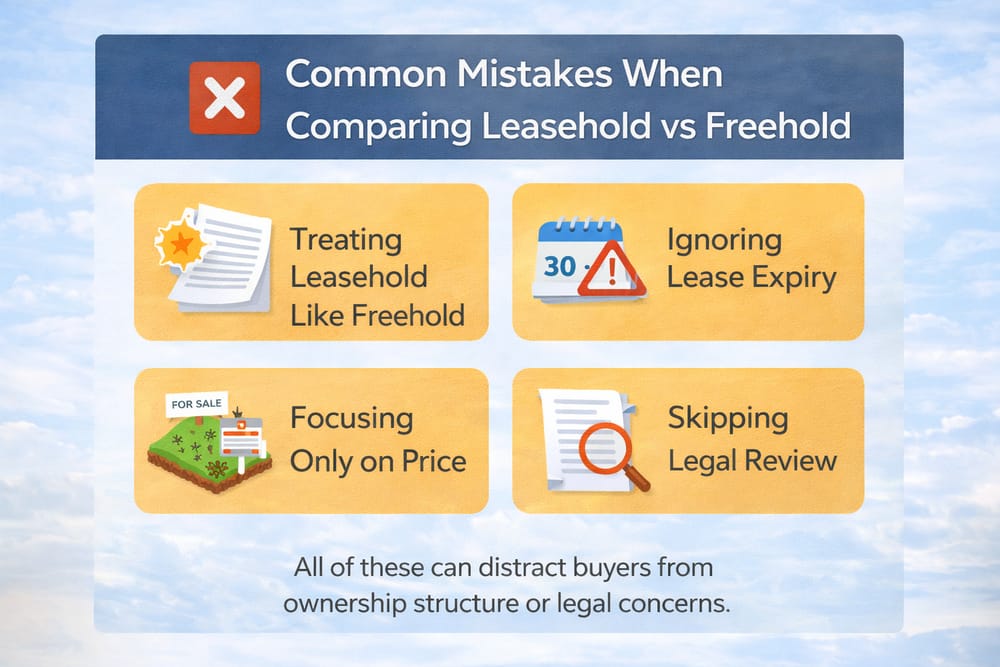
These are the most common errors we see in the Pattaya market.
It is not the same. It can still be valid, but it should not be viewed as identical.
A condo and a villa should not be analysed the same way.
A cheaper leasehold today can still be the wrong fit if your real goal is long-term security or easier resale.
They are not. Contract wording and enforceability matter.
If you want foreign freehold, confirm quota availability before getting too emotionally attached to the unit.
Brochures and sales talk should never replace independent legal review.
A retirement buyer, a lifestyle villa buyer, and a resale-focused investor may all need different answers.
For most foreign buyers in Pattaya, the simple version is this:
- If you are buying a condo and foreign freehold is available, that is often the cleaner and stronger long-term option
- If you are buying a house or pool villa, leasehold may still be part of a practical structure — but it needs more careful legal review and clearer expectations
- The right answer depends less on what sounds better in theory, and more on what fits your real goal, holding period, and exit plan
Freehold is usually preferred because it is more straightforward.
Leasehold can still be workable and sometimes entirely sensible.
But the biggest mistake is not choosing leasehold — it is choosing any ownership structure without fully understanding how it affects your security, resale options, and long-term flexibility in the Pattaya market.
If you are still deciding between different property types, locations, or ownership structures, the safest approach is to compare the legal structure before you fall in love with the unit.
If you are already comparing active listings, reviewing a wider range of properties for sale in Pattaya can also help you see how ownership structure, property type, and pricing differ across the market.

Jom
Sales Manager
Avoiding Rental Scams in Pattaya: What to Look Out for When Renting (2026 Guide)
Learn what to look out for when renting in Pattaya in 2026, including common rental scams, agent risks, and contract mistakes to avoid.
Best Areas to Buy a House in Pattaya 2025 | PropertySpace Pattaya Guide
Discover the best areas to buy a house in Pattaya in 2025, from family-friendly neighborhoods to premium villa zones.

Best Areas to Live & Buy Property in Pattaya — PropertySpace Neighborhood Guide
Looking for the best areas to live or buy property in Pattaya? Discover lifestyle insights, expat favorites, and expert guidance from PropertySpace.
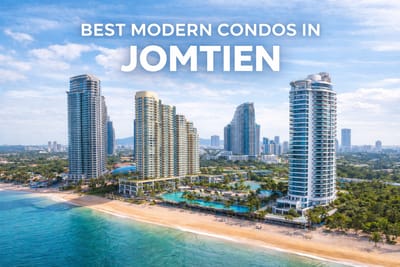
Best Modern Condos in Jomtien (2026 Guide for Foreign Buyers)
A practical 2026 guide to the best modern condos in Jomtien for foreign buyers and expats, featuring beachfront, lifestyle, and long-stay condominium options.

Best Pattaya Properties for Sale: Condos, Houses & Villas
Explore the best Pattaya properties for sale, including condos, houses, pool villas, top areas, prices, and buying tips for foreign buyers.

Best Real Estate Agency in Pattaya 2025 | PropertySpace Guide
Discover how to find the best real estate agency in Pattaya. Expert tips and trusted local insight from PropertySpace Pattaya.

Buying a Condo or Villa in Pattaya: The Ultimate Guide for Expats
Navigating the legal landscape is essential when buying property in Pattaya as an expat.
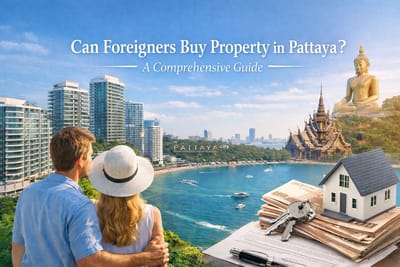
Can Foreigners Buy Property in Pattaya? A Comprehensive Guide
Understanding Property Ownership for Foreigners in Thailand

Discover the Luxurious Lifestyle at Zenith Pattaya: A Wellness-Centered Paradise
Pattaya's First Wellness-Centered Living Experience

Highgate International School Pattaya | Property Investment Guide
Discover how Highgate International School Thailand boosts Pattaya’s real estate market and property investment opportunities.
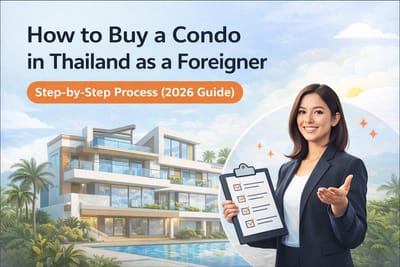
How to Buy a Condo in Thailand as a Foreigner: Step-by-Step Process (2026 Guide)
A practical 2026 guide for foreigners buying a condo in Thailand, covering foreign quota, FET, costs, contracts, and transfer steps clearly.
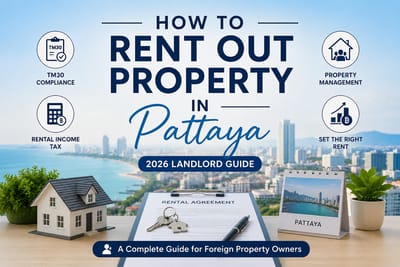
How to Rent Out Property in Pattaya: 2026 Landlord Guide
Learn how to rent out property in Pattaya as a foreign owner, including TM30, tenant screening, rental pricing, tax and property management.
How to Sell a Condo in Pattaya as a Foreign Owner
A practical guide for foreign condo owners in Pattaya covering resale pricing, documents, taxes, transfer fees and sending sale proceeds overseas.
International Schools in Pattaya: Complete Guide for Expat Families
Explore international schools in Pattaya, curriculum options, fees structure and best areas for expat families relocating to Thailand.

Luxury Coastal Living at Aquarous Jomtien Condominium, Pattaya
Discover Aquarous Jomtien Condominium, a stunning high-rise development in Jomtien Pattaya, offering breathtaking 85% sea-view units, world-class amenities, and luxurious living spaces.

Off-Plan Condos in Pattaya: A Wise Investment or a Risky Bet?
This article aims to guide you through the ins and outs of investing in off-plan condos in Pattaya.

Pattaya Smart City: How AI CCTV Is Making Pattaya a Safer Place to Live, Visit, and Invest
Pattaya Smart City is transforming Pattaya through AI CCTV, Pattaya Connect, and smarter public safety systems, helping create a safer city for residents, tourists, and property investors in 2026.

Property Inspection Pattaya: What Buyers Should Really Check Before Taking Ownership (2026)
Learn what buyers should really check during a property inspection in Pattaya, including common issues, timing, and new vs resale considerations.
Rental Agreement Thailand: What Pattaya Tenants Should Check Before Signing
Understand rental agreements in Pattaya, including deposits, lease terms, utilities, repairs and what tenants should check before signing.
Renting in Pattaya: What to Know Before You Rent
Everything you need to know about renting a condo, house, or pool villa in Pattaya — best areas, costs, documents, and what your rental agent actually does.
Thailand Elite Visa vs Retirement Visa: Which Is Right for Pattaya Property Buyers in 2026?
Thinking of buying property in Pattaya and staying long-term? This guide compares the Thailand Retirement Visa and the Thailand Privilege Card (Elite Visa) — covering costs, requirements, and which long-stay visa suits your lifestyle and budget in 2026.

The Riviera Beverly Hills Residence: Pattaya’s New Luxury Condo Investment Opportunity
Discover The Riviera Beverly Hills Residence, a luxury low-rise condo in Jomtien. Perfect for investors, expats & families seeking a Pattaya property.

The Riviera California - Iconic Living For The Few
Luxury Sea View Condos in Pattaya with 5-Star Concierge & Iconic Rooftop Pools | 122 Residences Only

The Riviera Santa Monica: Luxury Living Meets California Vibes in Jomtien, Pattaya
Discover The Riviera Santa Monica, an extraordinary 7th high-rise condominium by the award-winning Riviera Group.

Top 5 Condos in Pattaya 2025 | Best New Projects & Investment Guide
Discover Pattaya’s top 5 condo projects for 2025 — verified developments, investment potential, and local insight from PropertySpace.

Top Luxury Villas in Pattaya 2025 | PropertySpace Pattaya Guide
Explore Pattaya’s top luxury villa estates and pool villas in 2025 — gated communities, prime areas, and trusted insights from PropertySpace Pattaya
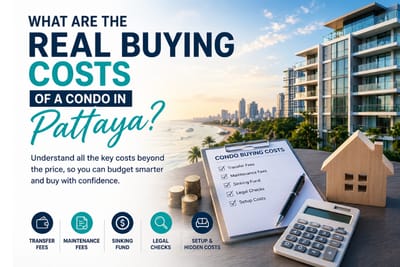
What Are the Real Buying Costs of a Condo in Pattaya?
Understand the real buying costs of a condo in Pattaya, including transfer fees, maintenance fees, sinking fund, legal checks, and hidden costs buyers often miss.

Where to Buy a House in Pattaya as a Foreigner (2026 Practical Guide)
A practical 2026 guide for foreigners buying houses in Pattaya, covering the best areas, ownership options, and real-life buying considerations.

Why Pattaya Attracts Long-Stay Residents, Retirees and Second-Home Owners in Thailand
Discover why Pattaya attracts long-stay residents, retirees, and second-home owners seeking coastal living, convenience, and lifestyle flexibility

Why Pattaya is the Ideal Destination for Retirement
Discover why Pattaya is the ideal place to retire in Thailand

Why Pattaya Property Looks Stronger in 2026: EEC Growth, 3 Million Baht Condo Rules, and What Foreign Buyers Should Know
Pattaya property in 2026 is being shaped by EEC growth, stronger infrastructure, Aquatique District, and the 3 million baht condo extension support route. This guide explains what foreign buyers should understand before investing.

089 714 1551 (ENG/TH)
Call Now081 969 4950 (ENG/CN)
Call Now